Knowledge is hard to manage in one place
Documents are scattered, systems are siloed, versions are messy. Knowledge islands block collaboration and reuse.
Seven specialized AI agents unify access to enterprise documents, systems, and business knowledge—building a trusted loop from processing and governance to distribution and calling, so every AI call is based on accurate, compliant, and up-to-date enterprise knowledge.
Documents are scattered, systems are siloed, versions are messy. Knowledge islands block collaboration and reuse.
Content is inconsistent, incomplete, and slow to update—hurting the accuracy and trustworthiness of AI output.
Business experience stays with individuals and teams; it cannot be structured, stored, and passed on.
Different agents face high access barriers and inconsistent formats, making it hard to call knowledge assets at scale.
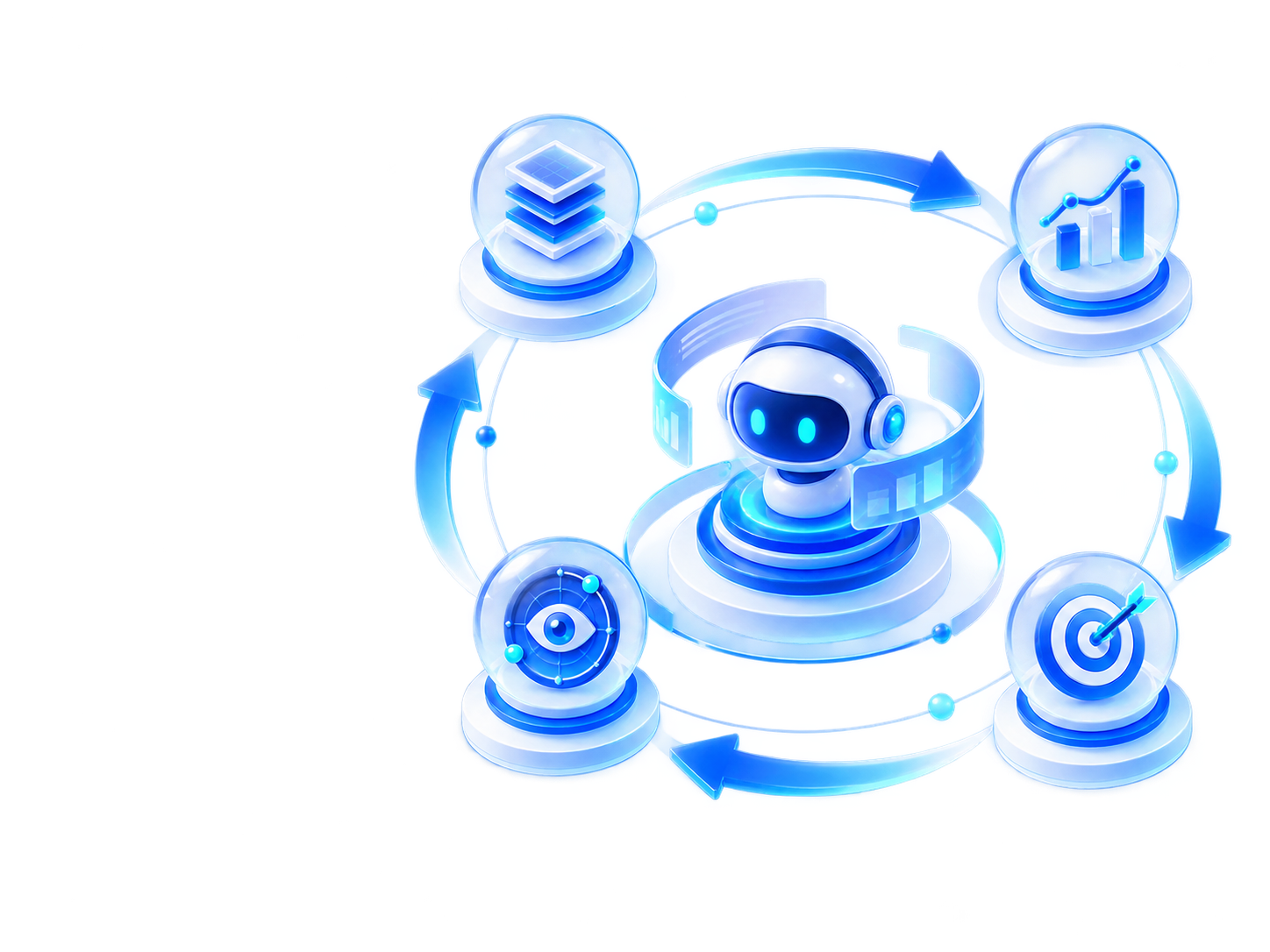
Usage feedback Gap detection Update & publish
Parse multi-format documents, extract content, and output structured, usable knowledge.
Entity recognition, relation extraction, and graph construction—so knowledge is easier to connect and understand.
Quality checks, tag management, and version control to keep knowledge trusted, compliant, and usable.
Automated inspection and health scoring to find issues and keep optimizing the knowledge foundation.
Generate test sets and run multi-round Q&A to keep validating knowledge in question-answering scenarios.
Full-chain monitoring and performance analysis to surface risks and usage opportunities in time.
Identify knowledge gaps and weak spots to drive supplementation and knowledge production.
Knowledge accuracy
Knowledge consistency
Knowledge coverage
Consumer satisfaction
Unify and parse unstructured enterprise knowledge, turn it into standardized assets such as SOPs and FAQs, and establish knowledge review and validation so enterprise knowledge stays accurate.
* Project data, confirmed with the customer before use